When I found out our trip to Hawaii was taking us to Oahu, I knew that I had to visit Pearl Harbour. I never understood it; however, there was a need in me to pay my respect to the people who died on the USS Arizona.

We managed to find a bus tour that took us to Pearl Harbour, and we were lucky enough to have fine weather, so the boats were ferrying people out to the memorial. Belinda and I lined up and awaited the arrival of our boat. I had not imagined the emotions I was feeling about this moment in time. It was a mix of honour at being able to be there and sadness at the tragic loss of life. Members of the United States Navy still man these boats, and the operation is run with perfection. Everybody is shepherded on and off with maximum efficiency, as you would expect.
There is a low rumble of noise coming from the people who are about to board the boat from which we just alighted. As I move further into the memorial, there is a silence only broken by the gentle slapping of water on the supports of the structure. Everyone understands that this is not the place for loud voices. Toward the centre is a fenced-off space that opens to the water below.
Looking over the edge of the barrier, the first thing I notice is two fish. Silver with black stripes down their bodies, to these fish, this spot is a good place for food.
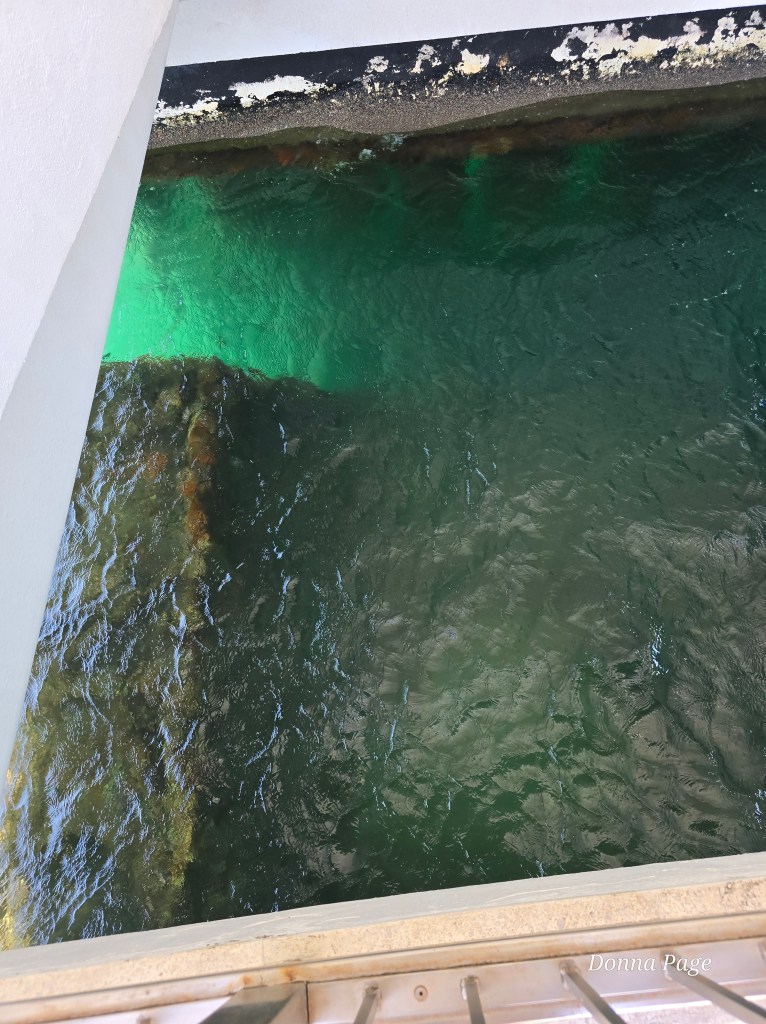
My eyes adjust to the light difference, and the shape below me starts to take form. This shape takes my breath away, just for a moment. I am looking down on the remains of the midship of the USS Arizona. A small section of the 185 metres of the battleship that had first set sail in 1915. She had served through the First World War with honour and continued her career as a naval vessel for a further 26 years.
At the time of the Second World War, in which the United States were not initially involved, Pearl Harbour was a training, maintenance and provisions base. In 1940, the Pacific Fleet was moved there to act as a deterrent to any attackers. The Arizona had been out of the harbour, returning on the 6th of December 1941, mooring where she still lies today.
Many of her crew had gone on day leave, which meant they had to be back on board at midnight on the 6th. Fifty men remained on overnight leave. Fifty men who called the Arizona their ship. Fifty men who survived and grieved for the loss of the 1177 shipmates who were on board when the Japanese planes dropped their bombs.
The commander of this Japanese attack knew exactly what he was doing. He had been an attache to the United States Navy for several years prior to World War II. He knew the layout of the Arizona well. On December 7th, at 7.48am, Chuichi Nagumo ordered his men to attack Pearl Harbour and to drop an 800kg bomb directly over the ammunition store on the USS Arizona. This detonated all the munitions on board, including all the torpedoes.
The Arizona blew up, literally. The explosion lifted her hull nine metres above the water. She burned so hot that the fire could not be contained. Even being in the water, it took two days for the fire to burn itself out.
When you look down on the USS Arizona, you are looking at the final resting place of 900 crew members. They remain on their ship, unable to be separated from the molten metal. Only 277 bodies were recovered, and 335 crew members survived.
This was the moment that the US could no longer remain neutral. This was the day that they went to war with Japan.
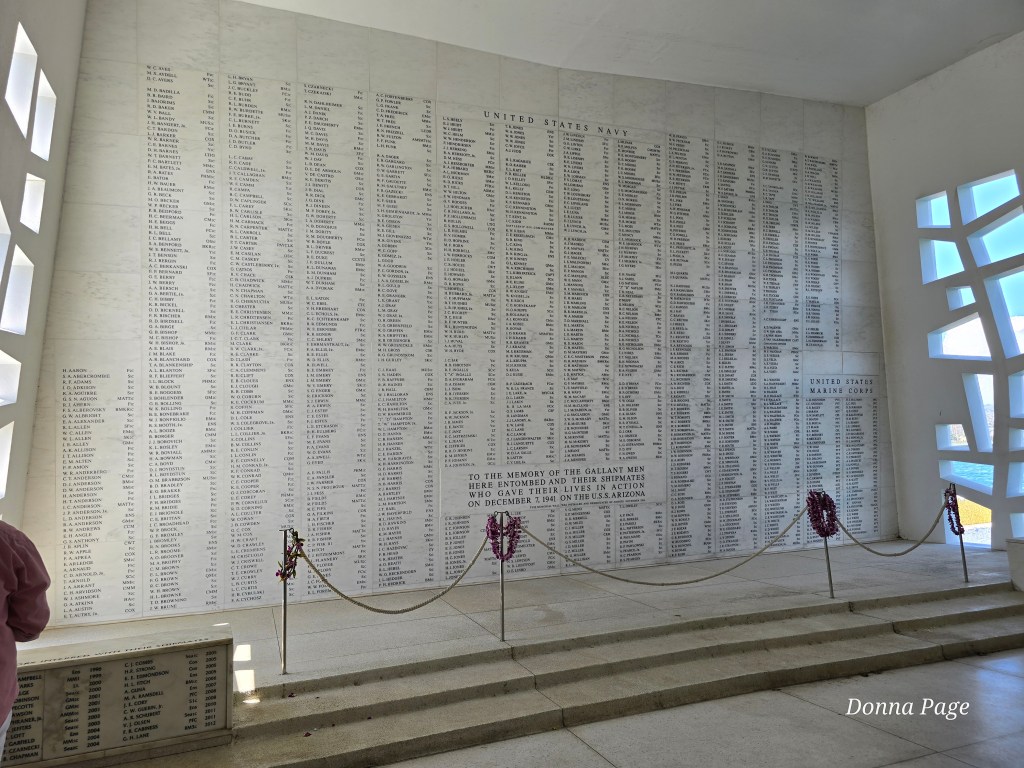
The memorial wall has too many names to read in the short time you have to visit, but I can say just seeing the many columns brought tears to my eyes. So many lives gone in an instant. Many of the 355 men who survived have had their ashes spread with their shipmates, together forever. There are no more left to tell the story as the last of the survivors, Lou Conter, passed away on the 1st of April 2024. Conter was responsible for saving several lives as he pulled men out of the burning oil on the water’s surface and into a lifeboat.
May they all rest in peace.
 Keeping Promises - A blog of travel, food, and stories.